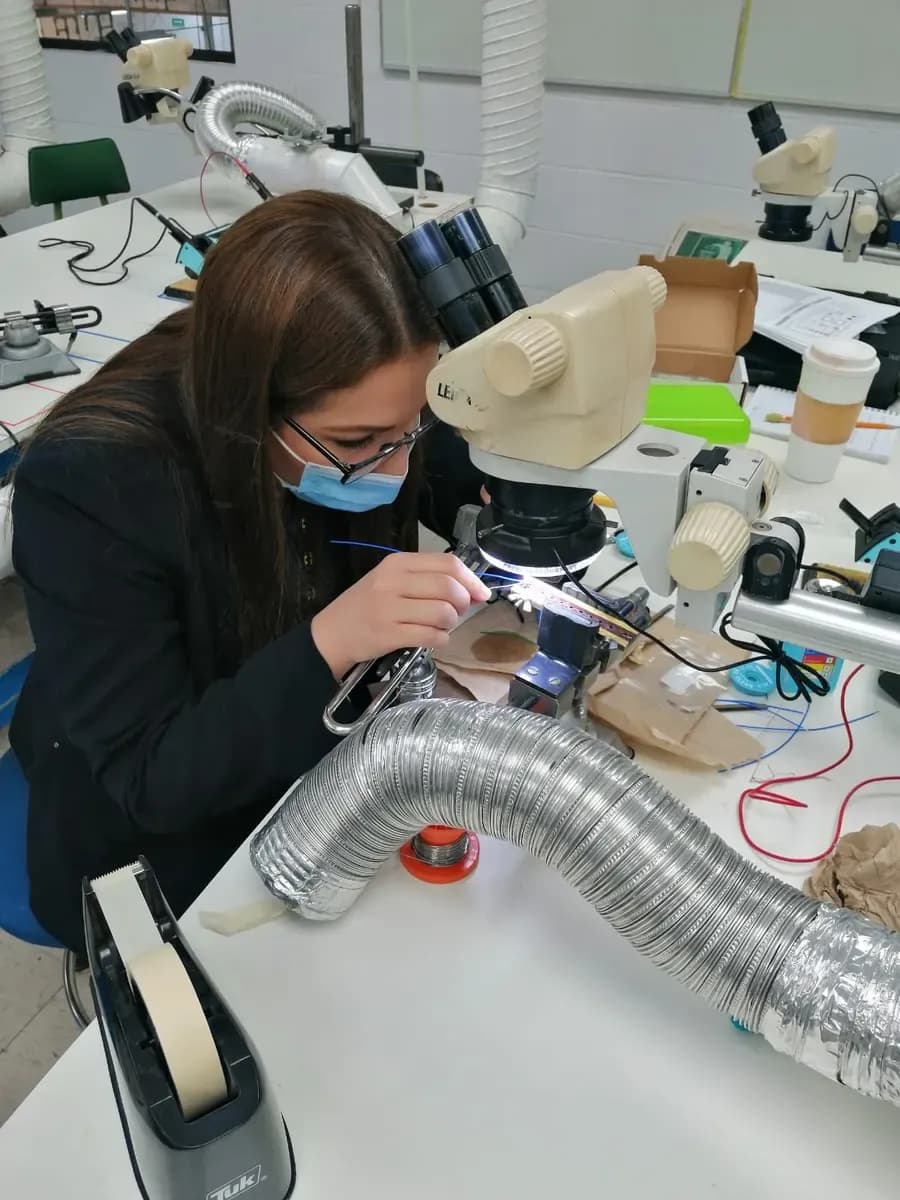

Counterfeit products are becoming more and more prevalent these days. They have begun to infiltrate various industries, including the electronics industry. Luckily, there are professionals who are trained to detect counterfeit electronic components. Discussed below are some of the processes they use.
Incoming Inspection: Inspection starts with checking the boxes for shipping damage or evidence of a fake barcode label. Then digital imaging is used to verify the part number, marking, lead straightness, color, or any anomalies related to the integrity of the device, such as cracks, dents, scratches, mechanical anomalies, spelling errors, suspect date codes, suspect logos, breaks, or corrosion.
Electrostatic Discharge Inspection
Electrostatic discharge can cause damage to electronic components and their assemblies if not packaged or handled properly. Components and packaging are thus examined for plastic, Styrofoam, rubber bands, cardboard, scotch tape, or other substances that can induce static electricity.
Physical Dimensions
The height, length, width, depth, arc angle, curvature measure, and pin-count are checked to make sure they meet the manufacturer’s specifications.
Marking Permanency
Components are submerged in a mixture of chemicals to determine whether the markings are still legible as a result. If the components are authentic, the markings should still be legible.
X-Ray Inspection
X-Rays are taken to analyze die size and wire bonding and to uncover any possible delaminations.
Internal Visual Verification
The die is checked for defects, and the logo on the die is checked to see if it matches the logo on the lid of the component. The die topography is checked to see if it matches the manufacturer’s specifications. Then the component itself is placed under a high-resolution microscope to determine if it meet’s the manufacturer’s specifications.
C-Mode Scanning Acoustic Microscopy
This screening technique can uncover anomalies in device packaging and construction. It has been most reliable in finding differences in device surface coatings.
If you are interested in counterfeit component training, consider enrolling in Blackfox’s courses. You could enroll in Blackfox’s counterfeit component detection program and receive certification in counterfeit detection. Review our course calendar for more information.
Source:
Federico, Joseph. (2009). Detecting Counterfeit Electronic Components. Evaluation Engineering.