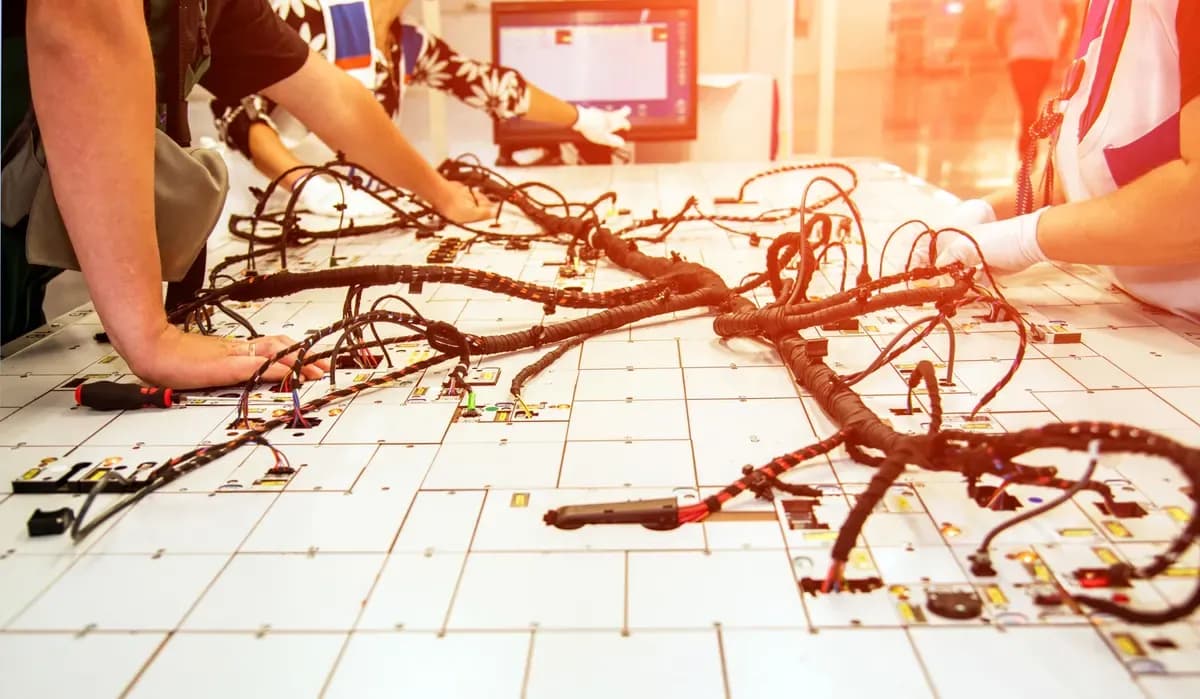

The IPC 620 Space Addendum, or more commonly referred to as the IPC/WHMA-A-620 Space Addendum, provides the industry-accepted standards for the fabrication and installation of wire and cable harness assemblies that are utilized for getting to space and for operating in such environment. If you aspire to build a career in the electronics manufacturing industry involved in space applications, it’s essential to obtain the IPC 620 Space Addendum Certification.
Overview of IPC/WHMA-A-620
In general, the IPC/WHMA-A-620 sets the acceptable standards for the electronics industry when it comes to procedures, materials, quality checks, and acceptability criteria for wire and cable harness assemblies utilized in various applications from everyday consumer appliances (Class 1: General) to medical and/or military devices (Class 3: High Performance/Harsh Environment).
The Space Addendum is an update that covers the modified and additional requirements to the general IPC/WHMA-A-620 standard. This will ensure that cable and wire harness assemblies are reliable and durable enough to survive the thermal cyclic environments and vibrations in space.
The Wiring Harness Manufacturers Association (WHMA) and IPC are working together to develop and update the IPC/WHMA-A-620 standard.
Importance of the Space Addendum in Aerospace Applications
The IPC WHMA A 620 Space Addendum plays a crucial role in aerospace applications.
This addendum tailors the base IPC/WHMA-A-620 standard to meet the stringent requirements of space environments. Space missions demand components that not only perform reliably but also endure extreme conditions over extended periods.
For instance, cable assemblies used in spacecraft must resist radiation and temperature fluctuations. The Space Addendum provides specific requirements to address these challenges, including stricter testing and inspection processes. This ensures that assemblies perform correctly in space, where failures can lead to mission setbacks or safety risks.
By adhering to the Space Addendum, manufacturers can avoid potential failures and enhance the reliability of their products. This adherence is vital for meeting the high standards set by space agencies and ensuring mission success.
Visit the WHMA’s official website to learn more about this update.
Brief History and Development of the Space Addendum
The IPC Space Addendum evolved from the original IPC/WHMA-A-620 standard to address the specific needs of space missions.
The initial standard was sufficient for many industrial applications but required updates to meet the unique demands of aerospace environments. The development of the Space Addendum began in response to the increasing complexity of space missions and the need for more reliable components for such missions as the Curiosity Mars Rover Mission or the Artemis Program.
In response, engineers and industry experts collaborated to create guidelines that account for the specific stresses and requirements encountered in space. The addendum includes updates based on technological advancements and lessons learned from previous missions.
These updates ensure that the standard remains relevant and effective in managing the challenges faced by modern aerospace systems.
Key Differences Between IPC/WHMA-A-620 and the Space Addendum
The IPC Space Addendum extends the base IPC/WHMA-A-620 standard with additional requirements specific to aerospace applications. These differences include:
- Enhanced Testing Requirements: The Space Addendum introduces more rigorous testing to evaluate the performance of components under space conditions. For example, it specifies tests for resistance to radiation and extreme temperatures that are not covered in the base standard.
- Stricter Inspection Criteria: The addendum mandates more detailed inspection processes to detect potential issues before components are deployed. This includes higher scrutiny of solder joints and insulation integrity.
- Specialized Material Specifications: The addendum outlines specific material requirements that differ from the base standard. These materials must withstand the harsh conditions of space without degrading. Examples of such materials include titanium alloys, aluminum alloys, Kevlar, and more.
These differences ensure that components not only meet general industry standards but also perform reliably in the unique environment of space.
Critical Requirements in the IPC/WHMA-A-620 Space Addendum
The IPC WHMA A 620 Space Addendum includes several critical requirements for aerospace cable and wire harness assemblies:
- Radiation Tolerance: As previously stated, components must endure high levels of radiation without failing. This requirement ensures that assemblies function properly throughout a space mission.
- Thermal Stability: Assemblies must perform reliably across a wide temperature range. The addendum specifies tests to verify that materials and components can handle extreme temperatures.
- Vibration Resistance: Components must withstand the intense vibrations experienced during launch and space travel. The addendum includes guidelines for testing and securing assemblies to prevent failure.
- Detailed Inspection Protocols: The addendum mandates thorough inspection protocols to identify and correct potential issues. This includes visual inspections, electrical tests, and mechanical checks.
Meeting these requirements is essential for ensuring that aerospace assemblies perform as expected under the demanding conditions of space missions.
Types of IPC/WHMA-A-620 Certification
There are essentially four types of IPC certification, depending on the person’s level of expertise:
- Certified IPC Specialist (CIS), which is designed for general operators;
- Certified Standards Expert (CSE), which is designed for consultants and coordinators in ensuring proper application of the 620 Standard;
- Certified IPC Trainer (CIT), which is designed for instructors who can train and certify CIS students; and
- Master IPC Trainer (MIT), which is an optional career upgrade for CIT holders and is generally linked to a single training center.
Most IPC training centers, however, only offer CIS and CIT courses for the Space Addendum certification.
Prerequisite for IPC/WHMA-A-620 Space Certification
To start processing your IPC 620 Space Addendum Certification, you must have an existing and unexpired IPC/WHMA-A-620 certification of the same type that you’re applying for, i.e., CIS or CIT.
IPC/WHMA-A-620 Space Training
Just like getting your IPC/WHMA-A-620 certification, obtaining credentials for the Space Addendum requires you to undergo IPC training to obtain the necessary skills and knowledge to, among others, accept or reject decisions by referencing the 620 Standard and the Space Addendum.
Depending on the IPC learning center, the class length for the Space Addendum training is around 40 hours (or approximately three to five days) for both CIT and CIS courses. To ensure making the most of your training and obtain high-quality learning, opt for classes with hands-on cable assembly.
Qualifying Examination
The IPC/WHMA-A-620 Space training concludes with a qualifying examination, which includes a written exam that CIS students must pass at least 80% with flying colors. Similarly, CIT students must also successfully pass their instructors’ exams with at least 80%.
Validity of Certification
The IPC/WHMA-A-620 Space Addendum CIS and CIT certifications are valid for 24 months.
Benefits of Compliance for Manufacturers
Compliance with the IPC WHMA A 620 Space Addendum offers several benefits for manufacturers:
- Enhanced Reliability: Compliance ensures that your products meet the stringent requirements of space missions, reducing the risk of failures and increasing reliability.
- Market Differentiation: Certification sets your products apart from competitors by demonstrating adherence to high standards. This can attract more customers and open new market opportunities.
- Increased Confidence: Compliance boosts confidence among customers and partners, knowing that your products meet rigorous standards and can withstand the challenges of space.
- Reduced Risk: Adhering to the addendum’s requirements helps prevent potential failures and associated costs, including recalls and damage to your reputation.
- Improved Processes: The certification process often leads to improvements in manufacturing processes and quality control, benefiting overall production efficiency.
Manufacturers who comply with these standards position themselves as leaders in the aerospace industry, capable of delivering reliable and high-quality products.
The Role of Certification in Ensuring Product Reliability in Space Missions
Certification plays a crucial role in ensuring that products meet the high standards required for space missions.
The IPC WHMA A 620 Space Addendum certification process includes rigorous testing and inspection to verify that products can withstand the extreme conditions of space. For example, certified assemblies undergo tests for radiation tolerance, thermal stability, and vibration resistance. These tests ensure that the products perform reliably throughout the mission, minimizing the risk of failure and ensuring mission success.
The certification process also involves continuous monitoring and updates to address any emerging challenges or technological advancements.
The Evolving Role of the Space Addendum in Aerospace Technology
The IPC Space Addendum continues to evolve as aerospace technology advances.
New challenges and technological developments drive updates to the addendum, ensuring that it remains relevant and effective. For example, recent updates have addressed new materials and manufacturing techniques used in space missions. These updates ensure that the addendum provides guidelines that match the latest industry practices and technological innovations.
The evolving nature of the Space Addendum reflects the dynamic nature of aerospace technology, adapting to new requirements and challenges as they arise, most of the time, at a rapid rate. This ongoing evolution helps maintain high standards of quality and reliability for space missions.
Upgrade Your Career Today!
Obtain your IPC/WHMA-A-620 and IPC 620 Space Addendum certifications if you aspire to a successful career in the electronics manufacturing industry with a chance to collaborate with NASA and other companies in the space and military industry.
At Blackfox, we offer a variety of IPC certification and related electronics courses as well as provide a range of training and support services for companies in the electronics manufacturing industry. Get in touch with us today.
See upcoming dates and formats for the IPC/WHMA-A-620 Space Addendum course, or the base IPC/WHMA-A-620 certification course if you still need the prerequisite.